Automotive restraint systems — engineered components Call +91 9920638354 info@autogleam.in

Products / Catalogue

Seat belts,
by category.

Eight areas of manufacture and supply. Each entry describes what the product is, where it is typically used and what to consider when specifying it. Detailed product information is provided against a stated vehicle and application.

Categories  08 Supplied as  Assemblies & components Specification  Confirmed per enquiry Pricing  On request
Line diagram of a complete automotive seat belt fitted across a vehicle seat COMPLETE BELT
CAT / 01

Automotive Seat Belts

Complete seat belts manufactured for vehicle use — webbing, latch plate, buckle and mounting hardware supplied as one assembly rather than as loose parts to be matched later.

The right belt depends on the seating position, the mounting points available and how the vehicle is used. We work from that information outwards rather than offering a single universal part.

Supplied as
Complete assembly
Typical application
General vehicle fitment across front and rear seating positions
Key considerations
Seating position, mounting points, required belt length and routing
Specification
Product information available on request
Enquire about this category

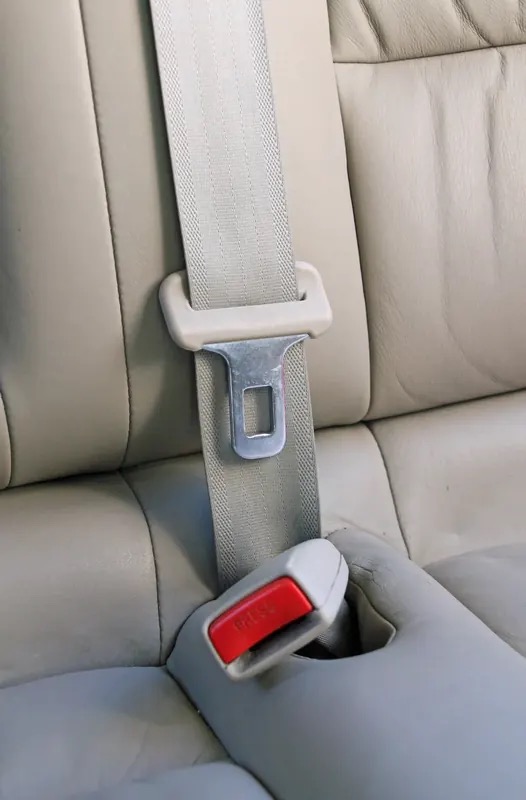
Three-point seat belt fitted on a light coloured vehicle seat, showing the shoulder webbing, latch plate and buckle
CAT 02 Three-point belt in a rear seating position
CAT / 02

Three-Point Seat Belt Assemblies

The familiar shoulder-and-lap arrangement, anchored at three points so restraint load is spread across the pelvis and the chest rather than concentrated in one place.

Fit is what makes a three-point belt work as intended. The upper anchorage position, the webbing length and the geometry of the run across the occupant all affect whether the belt sits where it should. A belt that is correct on paper but routed poorly in the vehicle is not doing its job properly.

Supplied as
Complete three-point assembly
Typical application
Front and rear outboard seating positions in passenger and commercial vehicles
Key considerations
Upper anchorage location, belt geometry across the occupant, webbing length, latch plate travel
Specification
Product information available on request
Enquire about this category

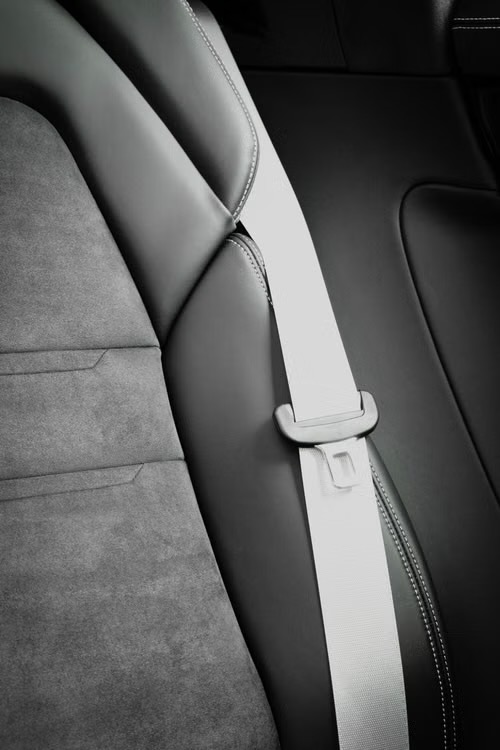
Light coloured seat belt webbing with its latch plate running down a dark vehicle seat
CAT 03 Retractable belt at rest against the seat
CAT / 03

Retractable Seat Belt Assemblies

Assemblies built around a retractor, so webbing is stored on a spool, drawn out smoothly when the belt is fastened, and returned without leaving slack when it is released.

Retraction is the part of a seat belt users notice most in daily life. A belt that will not pull out cleanly, or that fails to return, is the most common reason an otherwise sound assembly gets replaced. Smooth feed depends on webbing condition, guide geometry and the retractor working as designed.

Supplied as
Assembly incorporating a retractor
Typical application
Everyday passenger use where the belt is fastened and released many times
Key considerations
Retractor mounting and orientation, webbing feed path, available travel, guide loop position
Specification
Product information available on request
Enquire about this category

Line diagram of a two-point lap belt with a central buckle TWO ANCHOR POINTS
CAT / 04

Lap Seat Belts

Two-point belts that restrain across the pelvis, anchored either side of the seating position. They are used where the structure or the seating layout suits a lap arrangement rather than a full three-point belt.

Adjustment and anchor spacing matter here. The belt has to be able to sit low and snug across the pelvis, with enough adjustment range to suit different occupants without leaving excess webbing loose.

Supplied as
Two-point assembly
Typical application
Centre and bench seating positions, and layouts where a shoulder anchorage is not available
Key considerations
Anchor spacing, adjustment range, buckle position relative to the occupant
Specification
Product information available on request

Enquire about this category

Line diagram of a seat belt latch plate aligned with a buckle receiver housing RECEIVER LATCH PLATE
CAT / 05

Seat Belt Buckles & Receivers

The locking half of the restraint system: buckle housings, release controls, stalks and the receiver that the latch plate enters.

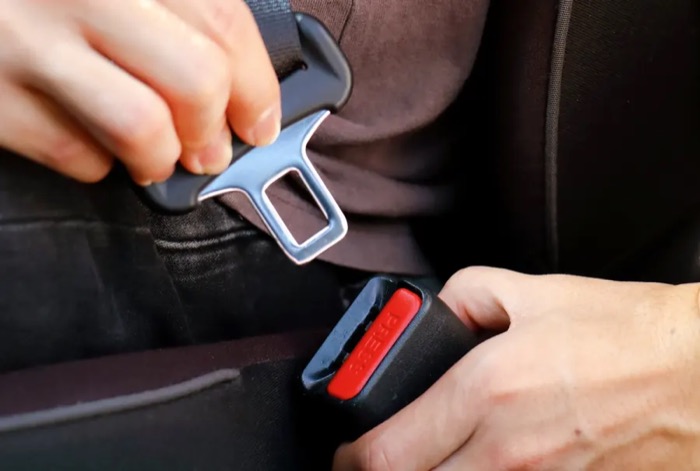
Two behaviours define a good buckle. It must engage positively, holding the latch plate without needing a second attempt. And it must release predictably — one deliberate press, the same effort every time, with no tendency to open when it should not. Latch plate and receiver are a matched pair; mixing parts that were not designed to work together is a common cause of poor engagement.

Supplied as
Buckle and receiver components, or as part of a complete assembly
Typical application
New assembly build and replacement of a worn or damaged buckle
Key considerations
Latch plate compatibility, stalk length and mounting, release effort, housing fit at the seat
Specification
Product information available on request

Enquire about this category

Line diagram showing webbing, an anchor plate, a guide loop and a fixing bolt as separate components WEBBING / PLATES / LOOPS / FIXINGS
CAT / 06

Seat Belt Components & Hardware

Individual parts of the restraint system supplied as components: webbing, latch plates, anchor plates, guide loops, height adjusters, sliders, bushes and fixings.

Component supply usually forms part of a wider assembly requirement rather than a standalone purchase, so it is worth telling us what the parts are going into. Hardware that is correct in isolation can still be wrong for the assembly it is destined for.

Supplied as
Individual components against a stated requirement
Typical application
Assembly build, repair of an existing belt, and stocked spares for workshops
Key considerations
Compatibility with the parent assembly, webbing width, fixing type and thread, load path at the anchor
Specification
Product information available on request

Enquire about this category

Hands guiding a metal seat belt latch plate towards the red release button of a buckle receiver
CAT 07 Latch plate and receiver at the point of engagement
CAT / 07

Replacement Seat Belts

Belts supplied to replace an assembly already in a vehicle — typically because the webbing has frayed or become contaminated, the retractor no longer returns the belt, or the buckle has stopped latching cleanly.

Replacement work is matching work. The new assembly has to suit the vehicle, the seating position and the fixings already present, including the anchor points, the bolt sizes and the space the assembly has to sit in. Photographs of the existing belt and its mountings make this far quicker to get right.

Fitting a replacement restraint is not a casual job. Anchorage points carry load, and we recommend that installation is carried out by a competent automotive workshop rather than improvised.

Supplied as
Complete replacement assembly, or matched components
Typical application
Worn, frayed, non-retracting or non-latching belts in vehicles already in service
Key considerations
Vehicle and seating position, existing anchor points and fixings, belt length, buckle type
Helpful with enquiry
Photographs of the existing belt, buckle and mounting points
Specification
Product information available on request

Enquire about this category

Line diagram of measurement callipers set against a length of seat belt webbing MEASURED TO THE APPLICATION SPECIFIED BY DISCUSSION
CAT / 08

Custom & Application-Specific Requirements

Work where a standard part does not suit the mounting arrangement, the seating layout or the way the vehicle is used.

These requirements start with a conversation rather than a catalogue number. What is the vehicle, where does the belt need to anchor, how much travel is needed, what has been tried already and why did it not work? From there we can say honestly whether it is something we can make properly.

If a requirement is outside what we can manufacture to a standard we are comfortable with, we will say so.

Supplied as
Agreed against the specific application
Typical application
Non-standard mountings, unusual seating layouts, specific length or routing needs
Key considerations
Available anchor points, load path, required travel, space around the assembly, conditions of use
Specification
Defined during the enquiry — not published in advance

Discuss a custom requirement

Before you enquire

Five details that
get you a real answer.

We do not publish universal specifications because a seat belt is only correct in context. Send these and the reply can be specific rather than generic.

  • 01VehicleMake, model and approximate year, or a clear description of the vehicle if that is easier.
  • 02Seating positionDriver, front passenger, rear outboard, rear centre — and which side.
  • 03Belt typeThree-point, lap, retractable or static, if you already know which is fitted.
  • 04PhotographsThe existing belt, the buckle and the mounting points. This resolves most identification questions on its own.
  • 05Quantity and purposeOne replacement, a workshop order or a recurring fleet requirement — it changes what we suggest.

Enquiry

Ask about a specific
product or vehicle.

Send your requirement and we will confirm what is suitable, what we would need to know, and what we can supply.